
Anyone who has spent any time in the Scripture knows that God’s word is so full of wonder that a lifetime of mining it will not exhaust its riches—there’s always more. Case in point: the story of Elijah and the Aramean army that is found in 2 Kings 6. I was teaching from this text recently when I thought about something I hadn’t given attention to before—something I hadn’t noticed in my previous encounters with the story.
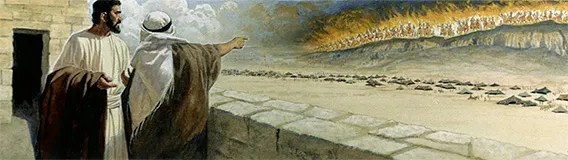
Most of us are familiar with the gist of the account—how the king of Aram had sent a “strong force” (NIV) or “great army” (ESV) out at night to to surround the city of Dothan where Elisha was. The following morning, Elisha’s servant saw them and was paralyzed with fear. Elisha asked that God would open his servant’s eyes (and He did) with the result being that he saw a heavenly army with “chariots of fire” (v. 17).
Now here’s the part I hadn’t considered before. If this were our first time reading this and we paused the scene to take a poll, most of us would say that what we expected to happen next would be that the Aramean army would be destroyed by the heavenly forces. But of course, that’s not what happened.
The heavenly army didn’t engage the Arameans at all. It appears they were made visible for the purpose of providing Elisha’s servant with confidence that God was with them. But God didn’t use means that were clearly at His disposal to use to take care of the problem the army represented as they closed in on Elisha and his servant—He had something else in mind. And as we would expect, it was something better.
The point in this is that God does not think like we do (Isaiah 55:8-9). One obvious application that occurred to me is how this applies to our prayers. Have you ever noticed how practiced we can be in not only telling God what we desire—but also telling Him how He is to do it?
- Elisha and his servant are surrounded by the Aramean army in Dothan. Please pray that God will use His heavenly army to defeat the Arameans and spare their lives.
Who knows? Maybe someone in Dothan actually prayed this prayer. If so, they didn’t get everything they asked for—but they did get what was important. I think that’s part of the point—to help us be more discerning about what’s truly important and what’s not.

Beyond that, there’s the larger issue of trust. Why do we even feel the need to tell God how we think something should be done? After all, we wouldn’t be asking Him if we didn’t think He was capable, would we? And if we think He’s capable of granting our prayer, why would He need instructions from us on how to answer it? After all, we’re not in a restaurant telling the wait person how we want our steak done—we’re petitioning the Almighty! And as this story shows, He knows the best way to accomplish His will.
Just ask Elisha. He simply asked God to “open his eyes that he may see.”
We can learn from that.
God answers our prayers in His own way for our greater good as reflected in this popular verse:
I asked for strength and God gave me difficulties to overcome.
I asked for wisdom and God gave me problems to solve.
I asked for courage and God gave me dangers to overcome.
I asked for love and God gave me troubled people to help.
My prayers were answered.

