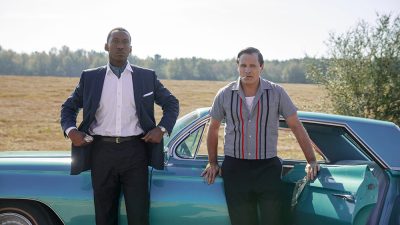
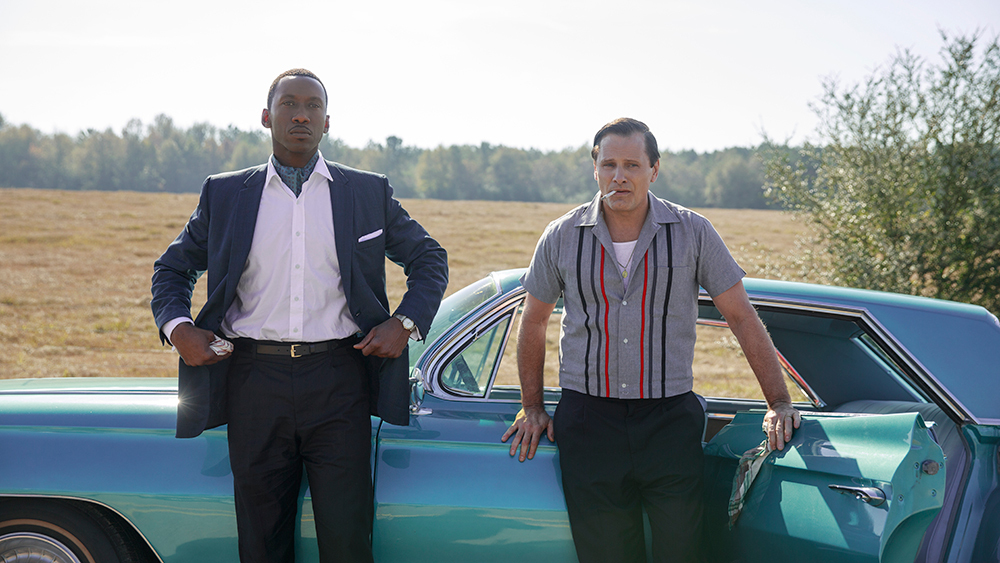
Green Book tells the story of Dr. Don Shirley and Tony “Lip” Vallelonga as they travel together through the South in 1962. Dr. Shirley is a black musician of Jamaican ancestry while Lip is an Italian American who works as a bouncer. They are worlds apart in personality, background, lifestyle, and just about anything else you can think of. But Lip is desperate for a job and Dr. Shirley needs someone who can be his driver and provide protection for him for his upcoming tour (The Don Shirley Trio). He has been assured by people he trusts that Lip is the right person for that. Despite their considerable differences, they decide to hold their noses and join forces.
The movie is based on a true story, but not exclusively so. It exercises the artistic license we’ve grown (disappointingly) accustomed to. The tour Vallelonga drove Dr. Shirley around on didn’t last two months (as portrayed in the movie)—it was over a year. Dr. Shirley didn’t one brother but three (and his family says they all had a good relationship). Sundown towns were much more prominent in the North than in the South. These are dents and dings on the vehicle of the movie, but they don’t prevent it from taking us on a special ride.
The movie is set against the backdrop of racism and yet, in the end, I think there’s an even larger message than accepting someone with a different skin color—it’s accepting anyone who is different than you—in any way. Lip’s community is Italian American—everyone else is an outsider. Dr. Shirley’s community consists of those connected with his music. Both men learn the beauty of expanding their relational horizons. According to an article in the Smithsonian (The True Story of the ‘Green Book’ Movie), this is exactly what happened. The article quotes Lip’s son, Nick, saying that the trip “opened my father’s eyes…and then changed how he treated people.” People—not just those with a different skin color.
I think this is important because this is the bare bones, generic prejudice that so often gets lost in the shuffle. We hear messages telling us to love people with this skin color, or this lifestyle, or this political persuasion. Fragmented messages offering fragmented solutions will not produce wholeness. That’s why is His teaching Jesus went all the way to ground zero.
If you love those who love you, what reward will you get? Are not even the tax collectors doing that? And if you greet only your own people, what are you doing more than others? Do not even pagans do that? (Matthew 5:46-47).

Loving those who are like us is the default setting of life. No one has to tell us how to do it—we do it naturally. It’s how we act toward those who are different than us that reveals our true character. Do we love the introvert? The extrovert? The bossy person, the rude person, the crude person, the intolerant person? People who are younger, older, moody, happy, sad?
We belong to each other! We live on the same planet. We breathe the same air. We have the same Father. We are part of the same family. What a difference it would make if we would remember that about each other before we thought about our differences.
For us to live with this understanding is what God desires. When Jesus talked of those who were strangers, hungry, homeless or hurting, He spoke of them as His “brothers and sisters” (Matthew 25:40). He showed solidarity with them because He recognized that whatever else they were, they were people first. They were part of the human family therefore they were part of His family.
I think that’s what makes Green Book such a powerful movie. It is the story of two very different, imperfect people learning not only how to get along, but how to appreciate and value one another.

