
The story of Noah begins the second cycle of the Genesis narrative (Brueggemann). In the first cycle, we see the creation of the world followed by rebellion—first through Adam and Eve, then by Cain, and finally Lamech (4:19ff). In the second cycle, we see rebellion (6:5ff) followed by re-creation, as God destroys the world inContinue reading “When God Shows His Colors”
Author Archives: A Taste of Grace with Bruce Green
Repentance and Coming to God

One of the ways that a faith that is full, alive, and vital will manifest itself is in what the Scripture refers to as repentance. (I’ve borrowed significantly from J.W. McGarvey on the first three points). 1. Repentance is more than being sorry about your sins. In 2 Corinthians 7, Paul is discussing an earlier letter he wrote to theContinue reading “Repentance and Coming to God”
Some Background on 1 Corinthians

Here’s what we know as it relates to Paul, Apollos, and the establishment and early years of the church at Corinth: 1. Paul started the church in Corinth somewhere around 50 AD (see Acts 18:1ff). After 18 months, he left for Ephesus where he didn’t stay long before heading to Jerusalem and Antioch (18:11,19-21). 2. Continue reading “Some Background on 1 Corinthians”
What Happened in the Garden?

It’s easy to look at Adam and Eve eating the fruit from the tree and think, “What’s the big deal? Their curiosity got the best of them and they messed up. That’s no reason to bring down the universe, is it? Who did they hurt? What is it about eating some fruit that justified theContinue reading “What Happened in the Garden?”
The Range of Redemption

The Corinthians understood they had been redeemed through Jesus, but like some disciples today, they didn’t grasp how wide-ranging their deliverance was. If you ask people today about their salvation many will tell you something to the effect of “my soul has been saved.” That’s gloriously true and worthy of the highest celebration—it just doesn’tContinue reading “The Range of Redemption”
Building on Jesus

The immaturity of the disciples at Corinth was anchored, to a large degree, by their infatuation with worldly wisdom (the words “wisdom” and “wise” appear 28 times in the first four chapters). Despite the eighteen months Paul had spent there and the letter he had written to them (5:9), they were stubbornly clinging to theirContinue reading “Building on Jesus”
Flipping the Script

“God is with us”—that’s vital to know, isn’t it? From Psalm 23 to Romans 8, the Scripture tells God’s people in no uncertain terms that He is with them. In light of this, it’s a little strange that we spend as much time as we do wondering about the presence of God in our lives.Continue reading “Flipping the Script”
Faith and Philosophy

However else we are to understand Qoheleth (the “Teacher” or “Preacher”) in Ecclesiastes, it seems to me that it is important to pay attention to his wisdom statements—especially those where he speaks of his search for wisdom. The first such statement occurs in 1:16-17: “I said to myself, look I have increased in wisdom moreContinue reading “Faith and Philosophy”
The Search for Significance
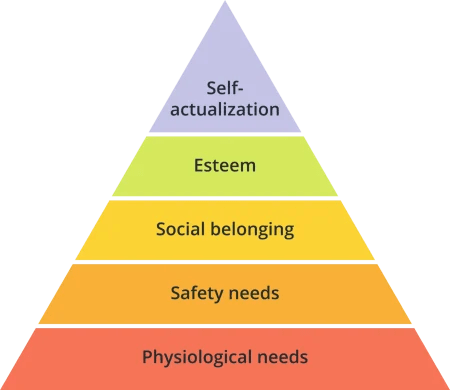
Was Maslow right and self-actualization is the end all of human existence? (Although Maslow later modified the hierarchy, his original version is what he is remembered for). Or was John Lennon right when he said/sang there was no heaven? While Maslow’s apex was individualistic, Lennon’s goal (at least in “Imagine”), was more communitarian (“the worldContinue reading “The Search for Significance”
Dying to See

Paul will tell the disciples in Rome they are to count themselves “dead to sin but alive to God” (6:11). He has previously spoken of baptism as being the place where they “died to sin” (v. 2) and were “baptized into His death” (v. 3)—that is, the death of Jesus. What does he mean? Jesus’Continue reading “Dying to See”

