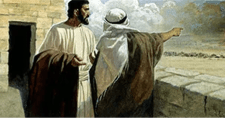
The episode in 2 Kings 6:8-23 takes place around the middle of the ninth century BC. It is during the time of the divided kingdom and the Arameans (the Hebrew term for those who lived in Syria), are a constant thorn in the side of the Israelites. During Elijah’s time, they fought against Israel (and King Ahab) on at least three occasions—killing the king the third time. Their conflict continued down into the years of Elisha and now Ahab’s son, Joram is on the throne. Though not righteous, neither is he the wicked man his father was.

The narrative begins with the principle embedded throughout the story—the difference between seeing and not seeing. God has enabled Elisha to have a special ability to see where the Aramean raids are going to occur, so Israel is able to take evasive action. This happens over and over (v. 8-10). Initially, the Aramean king thinks there is a mole in his ranks until one of his officers convinces him that the cause is not defection from within but the prophet Elisha. In the context of the theme of seeing and not seeing—the king now sees what he didn’t before. But it’s not going to help him because he does the wrong thing with his insight. Insight is nice but it’s meaningless without a spirit of obedience.
Rather than respect Elisha as a prophet from God and submit to him, the king treats the matter as a simple military operation. They will find out where Elisha is and capture him. When he finds out the prophet is in Dothan, the king sends “a strong force” out to capture him. They went at night and “surrounded the city” (v. 14)
It is this force that Elisha’s servant sees the next morning. They have encompassed the city (v. 15). He is filled with fear because of what he sees (the army) and what he doesn’t see (anything else). The one who can see (Elisha), tells him, “Don’t be afraid . . . those who are with us are greater than those who are with them” (v. 16). Elisha then prays for his eyes to be opened and they are. As a result, he sees the army of God and of course, that changes everything. Alexander McClaren gives us something to think about when suggests that “the manifestation, not the presence, of the angel guard was the miracle.”
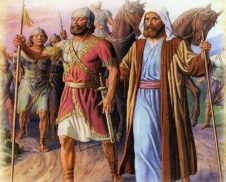
Elisha isn’t done. He asks God to blind the Aramean army and his request is granted. Elisha then leads the sightless army to Samaria—the capital of Israel. Once there, he asks God to restore their vision and He does. We can only imagine their shock when they see they are inside Samaria!
Israel’s king (Joram) asks Elisha if they should kill the soldiers. Elisha’s answer contains a semi-rebuking element. (The king has eyes but doesn’t see very well). Instead, Elisha calls for them to be given food and drink. “So he prepared a great feast for them” (v. 23). And there they are—God has set a table before them in the presence of their enemies. Would God do that for people who didn’t believe in Him and threatened His people? There’s no debate about the matter because He did! And He did it because this is the relationship He desires with everyone.
But the story doesn’t end there. After the captured army has eaten, Elisha sends them home! But that’s not the end of the story either because this so affects the king of Aram that “the bands of Aram stopped raiding Israel’s territory” (1 Kings 6:23). He now sees!
What are we to do with truths so glorious? How do we integrate them, not just into our theology—but into our biography? Because if our theology doesn’t affect our biography, it’s not much use to us or anyone else, is it?
Let me suggest one way we can make the word become flesh in this area. It’s anchored in Paul’s words at the end of Romans 12 where he speaks of not being overcome by evil, but overcoming evil with good.
Think about how Elisha did this. King Joram acted as if he wanted to execute their Aramean captives. But Elisha had something else in mind, something better. He wanted to overcome their evil with good (Romans 12:21), so he had a feast prepared for them.
And what did God do with that? He used Elisha’s graciousness to bring an end to the hostilities. That’s what happens when we make the effort to overcome evil with good—we are inviting God to get involved.
So the question for us is: in what way will we invite God to get involved?
2 Kings
 A Taste of Grace with Bruce Green