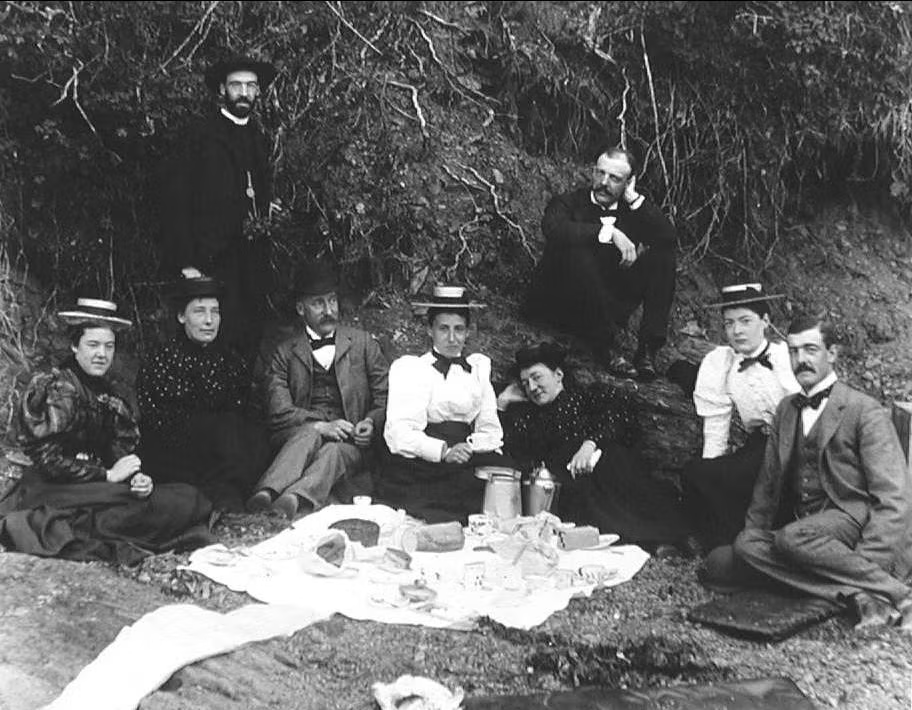
The first land battle of the Civil War was the Battle of Bull Run in Manassas, Virginia. It’s sometimes referred to as the “Picnic Battle.” After the capture of Fort Sumter by Confederate forces in April, both the North and the South had been enlisting men and building their armies. Nonetheless, many thought the conflict would be over quickly (Union soldiers were signed up for ninety days). Since the Union had superior funding, resources, and a more professional army. Some even thought the confrontation would be more posturing than actual fighting.
Add all that up and what do you get? Historian Bruce Catton tells us how:
. . . reckless Washington civilians . . . supposed that the edge of a battlefield would be an ideal place for a picnic. For hundreds of Washingtonians had come to see the show that day. They came in carriages, wagons, buggies, and on horseback, they brought hampers of food and drink with them, and they were spread all over the slanting fields east of Bull Run, listening to the clangor of the guns, watching the smoke clouds billowing up in the July sky, and in general making a holiday out of it.
They chose to look at the battle from a social context rather than a military one. The nearly 5,000 dead and wounded told them how mistaken they were.
But to a lesser degree, we’ve all been there, haven’t we? We’ve misread a particular situation and our words and actions followed closely behind. If we were fortunate, it was nothing more than a faux pas and some momentary embarrassment. But it all started with our failure see something in its proper.

In the same way, it’s easy to think of hardships (I’m using that as an inclusive term for trials, adversity, suffering, etc.), exclusively from a social perspective. Someone is having a rough go of it, and our only thought is for them to get through it ASAP. Everyone and everything are treated this way. After all, why would anyone think any differently?
Because God does.
Think about it:
- Would we tell Abraham we’ll pray that he doesn’t have to make that three-day trip to Moriah? After all, everyone is telling him (and us) that no good can possibly come from it.
- Would we tell Joseph we’ll pray that he is able to get a quick, quiet divorce to Mary’s “indiscretion?” After all, he’s such a noble person and deserves to be treated better.
- Would we tell Jonah we’ll pray that the storm subsides so everyone can get on with their cruise because such weather could never serve any higher purpose, right?
If we said “yes” to any of these three scenarios, we’d be attempting to pray these people right out of God’s purpose for them and away from the blessings He wanted to bring them and others.
 A Taste of Grace with Bruce Green