Several years ago, our family vacationed at a state park near Warm Springs, Georgia, where FDR’s Little White House is located. Roosevelt had the house built just before he took office in 1933. He had initially visited the springs almost a decade earlier, like so many others, looking for a cure for the polio that ravaged his body. Although he never found healing, he did experience relief, and the site remained a favorite getaway. He was at Warm Springs when he suffered a cerebral hemorrhage in 1945.
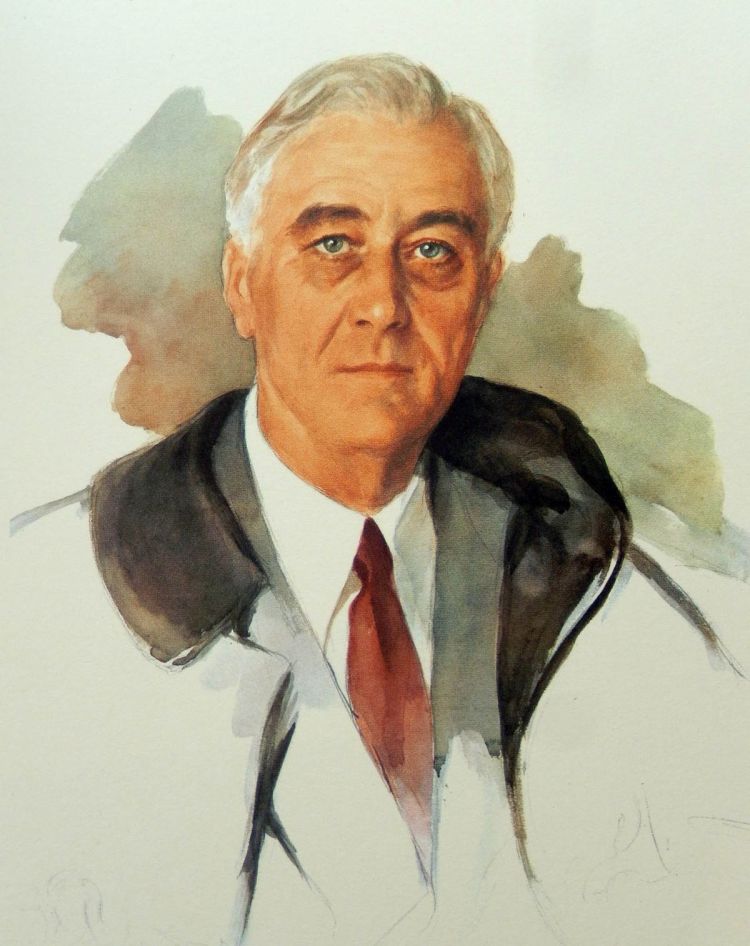
At the time of his death, Roosevelt was sitting for a portrait by Elizabeth Shoumatoff. She had worked with him the previous two days and was supposed to finish the day he died. I’m sure she mourned his passing and grieved for his family as the rest of the country did. But at some point, her mind must have returned to her work, and my guess is that she would have been devastated that a once-in-a-lifetime opportunity that had come so close to completion would remain forever undone.
She needn’t have been. As things worked out, the unfinished portrait of Roosevelt is Shoumatoff’s best known work. Its incomplete state dramatically captures one of our country’s most critical events. It reaches out and pulls the viewer into the moments immediately preceding FDR’s death and makes you feel like you are there.
During that same trip, we visited the town of Warm Springs. As we traipsed through its shops and businesses, I remember coming across an item of interest in the back of a small antique store. It was a carousel horse. In its earlier days it had undoubtedly occupied one of the places of honor on a merry-go-round. You could almost see the gleeful, bright-eyed boys and girls as they rode ’round and ’round while the music played.
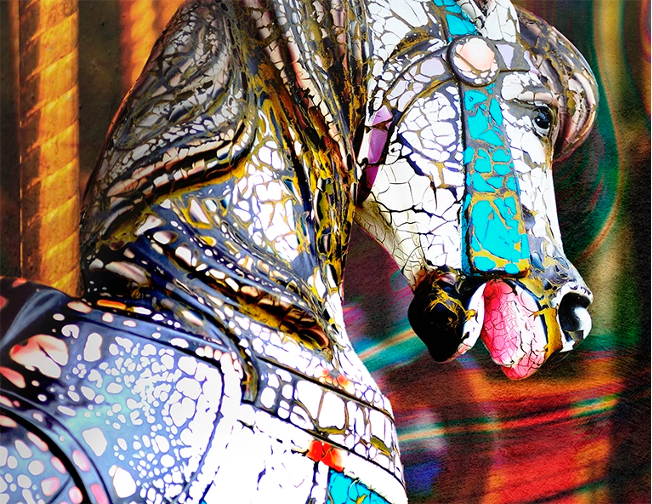
But those days were long gone for this horse. The years had taken their toll, and its original paint was cracked throughout. Rather than trying to scrape or strip the old paint off, some wise restorer had simply but carefully cleaned the horse and then put a coat of finish on it. (The picture is not the horse I saw but gives you an idea of what it looked like “before”). The result was that the cracks in the paint now appeared to be part of the decorative design—its brokenness had been turned into beauty.
This piece doesn’t have much to say to those whose lives are one unbroken stream of achievement and success. But if you’ve been around long enough to see some dreams die, to have been kicked around by life, or if you’ve watched the things you’ve given your life to broken (Kipling), then I suspect there might be something here for you.
What is it?
Simply this: the goals we set for ourselves and the dreams we have don’t matter to our Father nearly as much as our efforts to please Him. It’s our availability that concerns Him more than our ability. By our standards, our work/life might seem unfinished or broken, but in God’s hands it can be transformed into something beautiful. The One who can turn of patch of barren desert into an oasis or a caterpillar into a butterfly, can take the unfinished work of our lives with all its cracks and crevices and make something beautiful of it. If we allow Him, He will bring blessings out of our brokenness.
Forget the former things;
do not dwell on the past. See, I am doing a new thing!
Now it springs up; do you not perceive it?
I am making a way in the desert and streams in the wasteland. (Isaiah 43:18-19)
Trust in the One who transforms brokenness into beauty.
 A Taste of Grace with Bruce Green