“You must not eat from the tree of the knowledge of good and evil,” Genesis 2:17.
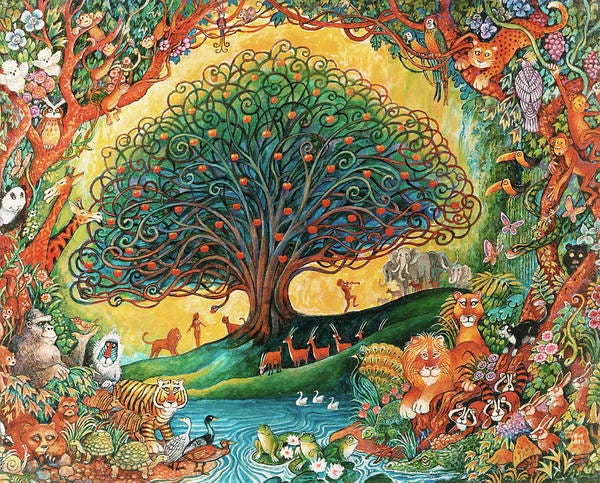
Of all the trees in the Garden of Eden, there was one special tree. It was in the middle of the garden (Genesis 2:19), perhaps to underscore the significant role it played in the continued closeness of fellowship that Adam and Eve enjoyed with God in the garden. The name of this tree was the tree of the knowledge of good and evil.
I like to think of the tree as the tree of trust. After all, that’s what it was. The tree was representative of whether Adam and Eve would trust God to determine what was right and wrong for them.
Now there are only two ways to learn about right and wrong; one way is through education, and the other is through experience. Experience can be a great teacher, but its tuition is sometimes very high. (We refer to that as “learning the hard way”). In such instances, education is not only the best way to go, it is the only way to go.
Adam and Eve had no knowledge (experientially speaking) of evil. They had some knowledge of good but since they had no knowledge or understanding of evil, they probably did not appreciate just how good “good” was. They had to trust in God and the education He had given them on the matter.
However, if they ate from the tree, all that would change. They would not have to take God’s word anymore, they would understand themselves. They would know from personal experience about good and evil. Therefore, they had a choice to make. They had to choose whether they would trust God to decide for them what was right and wrong. That was their choice at the surface level.
At a deeper level, their choice was whether they believed God was good. For only if they believed God was good would they be able to trust Him to decide what was right and wrong from them. It’s important to understand this because sin doesn’t begin with the desire to do wrong but with the failure to believe in what is good (God and His ways). That is why God’s indictment of Israel through Jeremiah in 2:13 was:
My people had committed two sins: They have forsaken Me, the spring of living water, and they have dug their own cisterns, broken cisterns that cannot hold water.
Notice that it was when Israel stopped believing in good (God), that they started desiring and doing evil. Is it any different with us? No wonder the Hebrew writer warns us in 3:12 of his letter:
See to it, brothers, that none of you has a sinful, unbelieving heart that turns away from the living God.
The greatest danger we face is to stop believing that God is good. It is important to understand that because if you do not, you don’t understand Satan’s strategy! Click here for more.
 A Taste of Grace with Bruce Green