
When you’ve eaten well and are among friends, the conversation can flow like a river. It might be light-hearted or substantive, but it is always special. In Luke 22:24-32, Jesus had an after dinner conversation with His disciples that continues to speak to us today. In that conversation:
Jesus taught about true greatness. As He instituted the Lord’s Supper at the conclusion of the Passover meal, Jesus spoke of His betrayer and the disciples naturally “began to question among themselves which of them it might be” (v. 23). The next thing you know, Luke is telling us, “A dispute arose among them as to which of them was considered to be the greatest” (v. 24). The transition is sudden, but it’s not difficult to follow—no one wanted to think they would betray Jesus, so they tried to make the case that it couldn’t be them by pointing to whatever “great” things they thought they had done. They went from defense to offense—and is it was quite offensive!
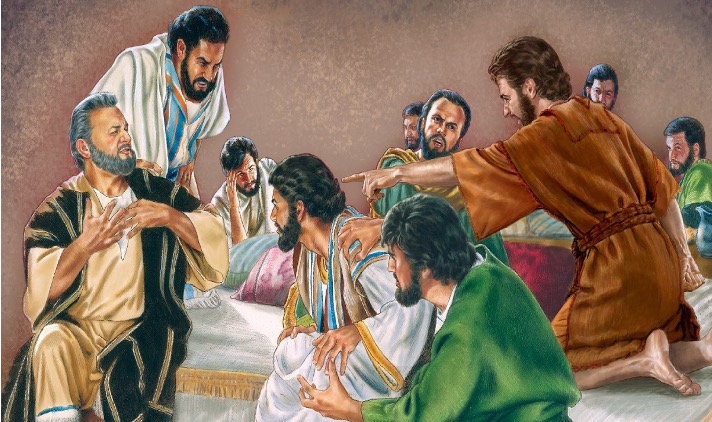
Christ told them that their self-promotion represented the pagan approach to power. By that standard, the one at the table was greater than the one who served—yet Jesus juxtaposed this with the truth that He was among them “as One who serves” (v. 27). In God’s kingdom, greatness is not measured by how much attention we can call to ourselves but by our ability to serve and bless others. As Jesus said, “It is more blessed to give than to receive” (Acts 20:35).
Jesus gave gracious recognition. There are not many scenes more poignant or sadder than the disciples sparring over which one of them was the greatest while Jesus was in His time of greatest need. (We would never do that, would we? Sigh.)
How did Christ respond?
He generously chose to make it an occasion to lift up and build His disciples. This was a long way from their finest moment, yet Jesus refused to pile on or see them solely in light of their shortcomings. He looked past their obvious failings to find something commendable. That can be challenging when someone is busily patting themselves on the back as the disciples were but nevertheless, Jesus did it.
Don’t you love that about Him?

It was Joseph Holt, Abraham Lincoln’s chief advisor on military trials (often for desertion during battle), who told about how the president “always leaned on the side of mercy. His constant desire was to save life.” John Hay, the Lincoln’s personal secretary and assistant noted “the eagerness with which the President caught at any fact which would justify him in saving the life” of a condemned man. (I don’t know it to be the case, but I’d like to think that Lincoln learned this from Jesus).
What did Jesus say to lift up and build His disciples on this occasion?
He told them, “You are those who have stood by me during My trials” (v. 28). It’s the counterpart to His earlier words, “I am among you as the One who serves.” And it was true. Whatever else could be said about the disciples, they had hung in there with Him (see John 6:60-70 for an example), and Jesus hadn’t forgotten that. In return He promised them a place of authority in His kingdom. (we see this fulfilled in the book of Acts).
With these words, Jesus was telling them, “I believe in you.” We often (and rightly so) focus on believing Christ, but do we ever stop to think about how Christ believes in us? He calls us, blesses us, and equips us because He believes in what we can do through Him. This is a powerful truth that needs unleashing.
Jesus had encouraging words for Peter. Jesus said that Satan wanted to sift the disciples like wheat to break them down. He would and he did. But Jesus didn’t stop there. He also told Simon He had prayed for him—that his faith wouldn’t fail. “And when you have turned back, strengthen your brothers” (v. 31).
Jesus recognized that the great failure for Peter wouldn’t be denying Him three times—it would have been his failure to get back on his feet after that. After all, Cain’s great failure wasn’t having his sacrifice rejected by God—it was how he mishandled that by allowing his anger to build which led to him killing his brother (see Genesis 4:6-7). So often our failure isn’t the initial one—it’s the malaise and self-condemnation afterwards that becomes our quicksand. Jesus knew this and encouraged Peter not to give in—and he didn’t! Through this text He is saying the same thing to us.
Are we listening?
Luke
Home
 A Taste of Grace with Bruce Green