How does God make the world right while maintaining His righteousness? How does He treat a person as if they’ve never sinned when in fact, they have sinned (over and over)? How can He treat the violator of His law the same as the one who keeps it and still maintain both the law and His integrity? This is the watermark in the background of Paul’s discussion in Romans 3:21-31.
We get an allusion to this in v. 25 when Paul speaks of how God, “in His forbearance He had left the sins committed beforehand unpunished.” Paul recognized the exceptionality of God’s actions in not punishing the sins of people from the past.
So, how did God do this?
The atonement
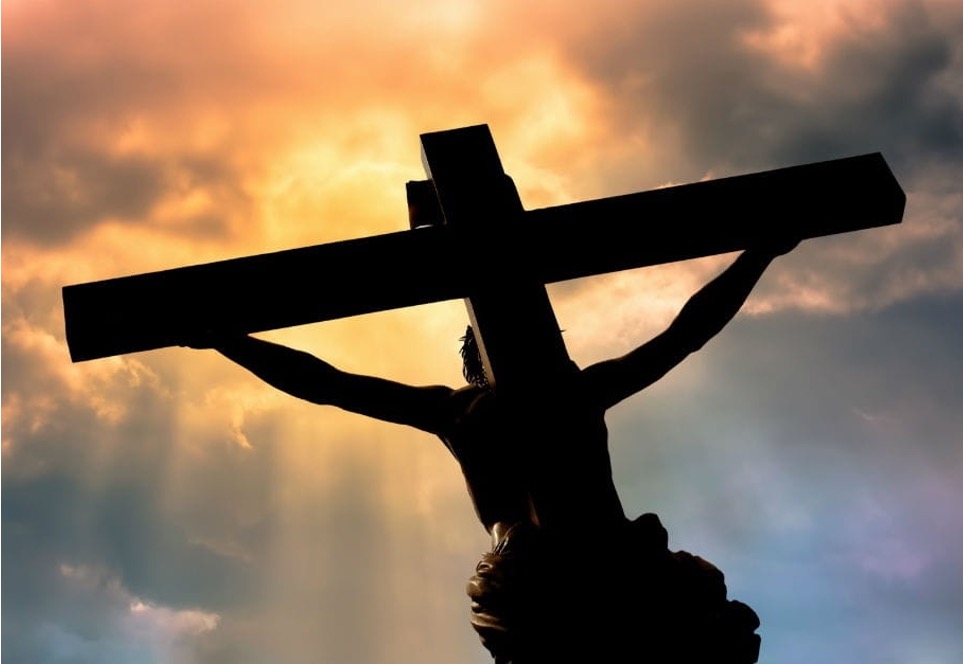
The short answer is that this was accomplished when “God presented Christ as a sacrifice of atonement” (v. 25). But what does this mean? Using this section (24-26) as a launching point, we’ll develop this and think about some important complementary truths.
1. The cross atones through Christ’s substitutionary death.

Part of appreciating His holy death lies in understanding how it was a sacrificial death on behalf of the world. Like the OT offering, the life of Jesus (the sacrifice) was given in place of the sinner (us). It was substitutionary. God in Christ did for us what we could not do for ourselves (2 Corinthians 5:18-19 NASB). Christ’ death is the basis for God offering life to man.
The cross atones for sin because Jesus’ substituted His life for ours.
That’s the main trail of the atonement—but there are several sub-trails that spin off this one that I think are worth looking at and will deepen our understanding and appreciation of the atonement.
2. In the atonement, we see true righteousness—God’s holy purposes for man were completely and fully honored in Jesus.
His death was not just another in a series of deaths of good people down through the ages. Jesus’ death was as unique as life. It was the holy death of the only man who has ever lived righteously.
Jesus lived to do His Father’s will in a way that no one else has ever come close to. It wasn’t a begrudging obedience He offered but a joyful, warm, vibrant submission. Following God was to Him what eating is to us (John 4:32ff). And of course, God was honored and delighted by His Son’s life. At whatever level we take His statements about Jesus at His baptism and transfiguration, we mustn’t fail to hear them in a relational sense as the words of a pleased and proud Father.
This was the life given to God at the cross. The cross is not to be looked upon as a separate entity—but rather as the culmination of a lifetime of obedience (Philippians 2:6-8). Jesus’ life and death fully honored God’s holy purposes for humanity because as a man He completely followed God’s law, God’s word, and God’s will. In Jesus, God’s righteousness was displayed for all the world to see. “This is My Son!

3. In the atonement, sin and its evil powers were exposed. At the cross, sin is exposed and we see its utter sinfulness. The world makes it look shiny, sleek, and desirable—but at the cross we see sin for the repulsive and hideous entity it is.
At the cross, humanity’s only righteous person was put to death. The political and military leaders, and the religious leaders conspired to do this. But the common people also had a part in His cruel death. In fact, they had the opportunity to overrule their leaders and have Jesus released, but instead they ended up shouting for His crucifixion (Matthew 27:23). And if we had been there, we would have joined right in. As the hammer pounds the nails into and through Jesus’ body, the sinfulness of sin throbs before our eyes.
4. In the atonement, sin and its evil powers were dethroned and defeated.
At the cross Jesus asked God to forgive the people crucifying Him. His mother stood there weeping and He made sure she was going to be taken care of after His death. He promised one of the criminals being crucified with Him that he would join Him in paradise.
What kind of person acts this way?
A thoroughly righteous one.
In the wilderness He said that man was not to live by bread alone but on every word that proceeded from the mouth of God. He said “No,” to worshiping anything or anyone other than God. He wanted nothing to do with presuming upon God in any way. Paul will say that Jesus “condemned sin in the flesh” (Romans 8:3). Through His thoroughly righteous life and death, sin and its powers were shown to be a fraud that had no right to rule over man. Paul wrote about how Jesus“disarmed the powers and authorities, he made a public spectacle of them, triumphing over them by the cross” (Colossians 2:15).
 A Taste of Grace with Bruce Green