Psalm 51 is a challenging psalm. There’s the historical context (it is likely a psalm written by David after Nathan exposed his adultery with Bathsheba and his murder of Uriah). Then there’s our context (i.e., most of us have not committed adultery and set a man up to be killed as David did). That being the case, does this psalm speak to us? If so—how?

Why this psalm is relatable
It speaks to us because even though we may not have sinned in the way David did, we have nonetheless sinned. More than that, we’re ongoing sinners. Wish as we might, becoming a disciple of Christ doesn’t change that truth.
What being a disciple should do though is sensitize us to our sin. It should get us into the healthy habit of calling it out and bringing it into the light. That way we can share it with God and others. By doing this, we can get the help we need so that we are not overcome by sin.
It’s important to understand people aren’t ultimately going to be lost because they’ve sinned—they will be eternally estranged from God because they sinned and then refused God’s offer of rescue. That’s what David was in danger of—he had fallen into the black hole of sin and failed to reach out to God.
We need this psalm then because we are sinners who want to be sensitive to our sinfulness. We need and want to understand how, despite our sin, we can enjoy life with God.
Making God’s grace treasurable rather than trivial
We can have life with God because of His grace. Grace means God does not treat us not as we deserve to be treated, but better, much better, than we deserve. The grace of God is an amazing thing. It is like nothing else, yet if we’re not careful, it can become easy to treat it like everything else.
How does this happen?
It happens because we tend to go through things in stages. There is the newness stage where we are dazzled by something and can’t get enough of it. Then there is the adjustment stage where we have normalized something and worked it into our lives. Both these stages are normal and healthy. But there is another stage that can follow that is not healthy. That is the trivial stage where something becomes so familiar we lose sight of its true value. As a result, it becomes minimized or ever worse, trivialized. This can happen with God’s grace—what should be treasured can become trivial.
But it doesn’t have to be this way. Things only become trivialized when we lose sight of their value and importance. As long as we appreciate God’s grace, we won’t be in danger of trivializing it. We can maintain our appreciation for God’s grace the same way we maintain our appreciation for anything else—by the renewing it in our mind on a regular basis. This can happen through Scripture, song, prayer, fellowship, and other ways. Attention is the oxygen of appreciation.
Living out the beautiful life of brokenness
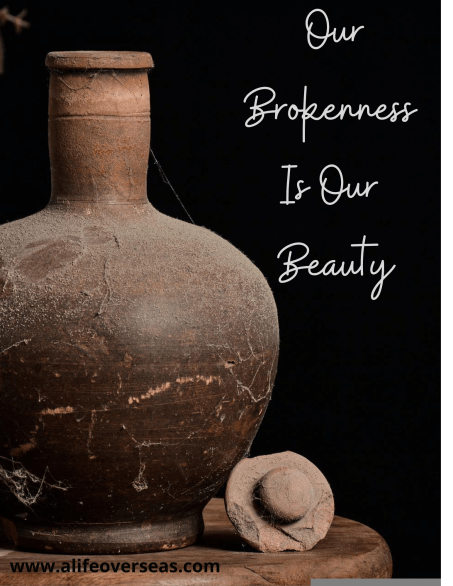
Treasuring God’s grace is essential because it’s the means by which we live a discipled life. The discipled life is one that is broken to our will and ways and open to God. (The only whole people are those who are broken). We hear this brokenness throughout the psalm. In v. 8, David speaks of his bones being “crushed.” In v. 17 he speaks of having “a broken spirit . . . a broken and contrite heart.” If your life isn’t broken, God hasn’t fixed it!
How do we live out this brokenness? We can’t—apart from God’s empowering grace. That’s why Paul told the disciples at Philippi to “work out your salvation with fear and trembling, for it is God who works in you to will and to act in order to fulfill His good purposes” (2:11-12). We work out because God works within. We can’t live out the beautiful life of brokenness on our own, but we can with God’s help.
Jesus modeled this brokenness as well as the joy that comes from such a life. As David says, it brings joy and gladness (v. 8, 12). Jesus spoke to His disciples about His joy being in them and their joy being complete (John 15:11). He also talked about how “no one will take away your joy” (16:22).
If it’s not broken, God hasn’t fixed it!
 A Taste of Grace with Bruce Green