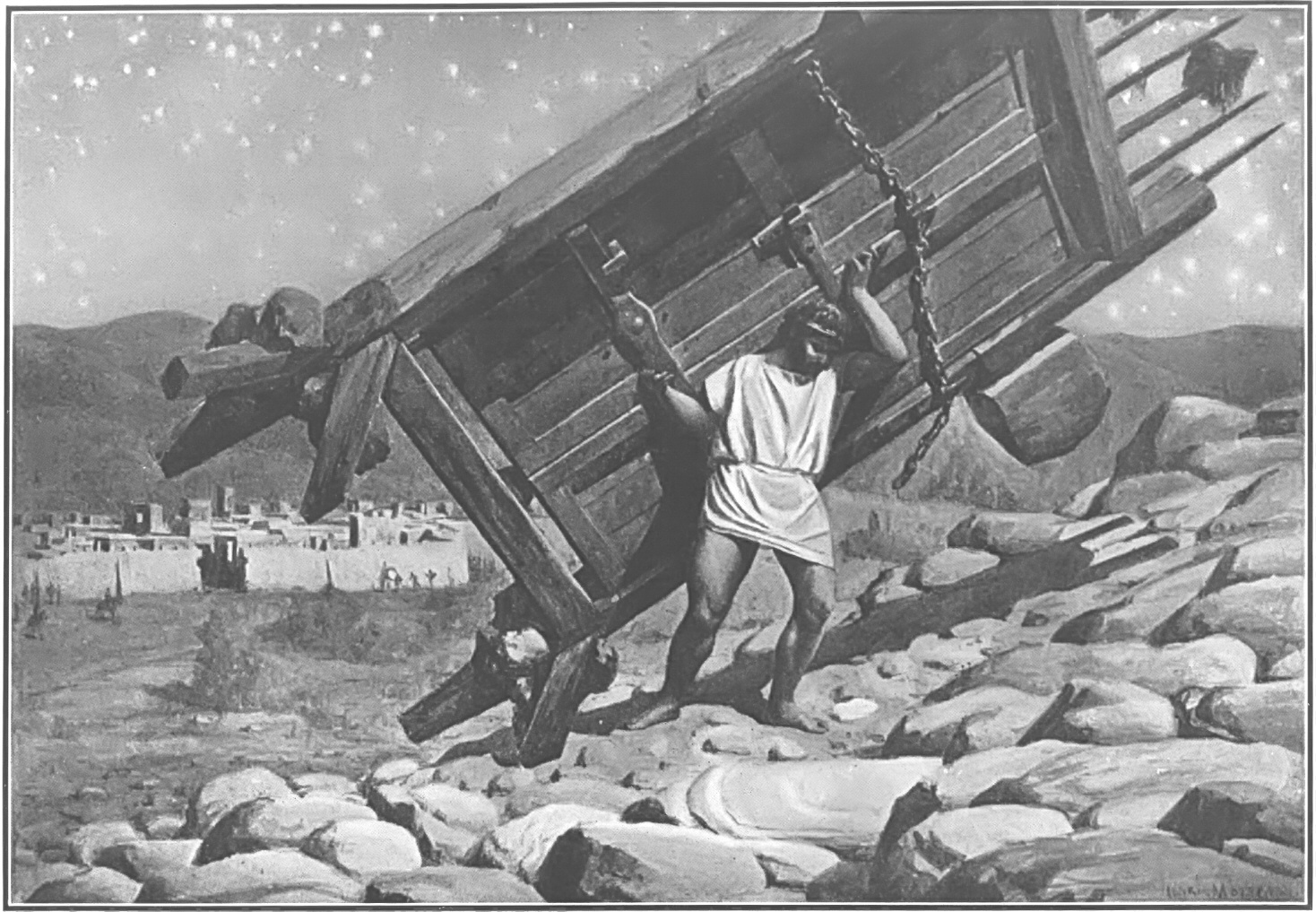
There are lots of lessons to learn from Joshua 6. Here are some of them:
1. The walls fell to servants, not lords. From beginning to end, God specified how He wanted everything to happen. Israel’s role was to carry out God’s commands. They weren’t in charge, He was. That is always the formula for victory.
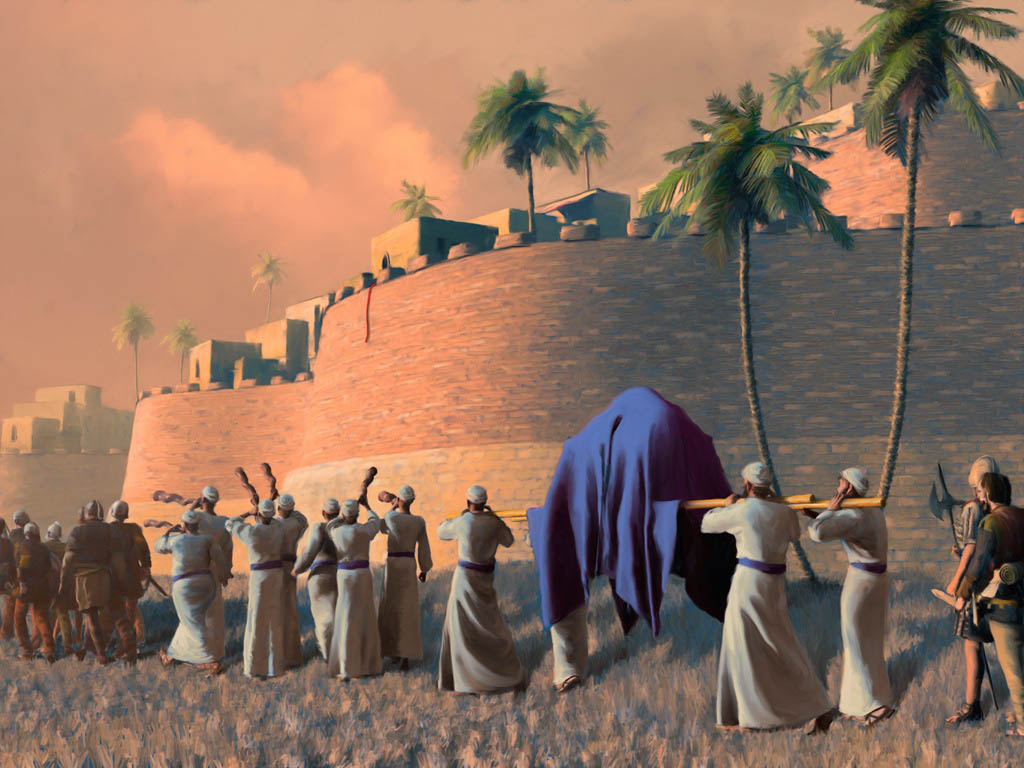
2. The walls fell by faith, not by force. Israel didn’t have the equipment necessary to break through the thick walls of a fortified city like Jericho. However, they had a large enough army to conduct a siege and starve their way into the city. But that would have taken a long time and God wanted them to understand He was giving them the victory (6:2). No, they weren’t going to take it by force, they would take it by faith—by trusting God and following His commands.
Walls today—walls of sin, weakness, fear, and everything else still fall through faith. And they fall just like they did at Jericho—one day at a time, one step at a time. That’s all we need to do as followers of Jesus—each day we keep putting one foot in front of the other for God. He’ll take care of the rest.
3. Walls fall to those who honor God. Israel honored God by obeying Him. We honor Him the same way. We’re not going to be perfect, but we can be persistent. We’re going to stumble and fall at times, but by His grace, we can get right back on our feet and keep moving forward. That honors Him.
That’s the story of the walls falling in Joshua 6. It’s one of the most well-known, best-loved stories in the Bible. Little children have marching around the city of Jericho in Bible classes and at VBS for as long as . . . well, as long as they could walk.
But what if this is only some of the story? What if there’s something underneath the story that we don’t see because like everyone else we get caught up in the trumpets blowing, the people shouting, and the walls falling? I think this is exactly the case. The story within the story has to do not with the Israelites, but with one of the Canaanites—a woman named Rahab?

You remember Rahab. She was a woman who was caught up in sexual sin (a prostitute). At great risk to herself she showed kindness in sheltering the two spies sent to Jericho by Joshua. In return for saving their lives, she and her family were spared when Jericho was attacked (v. 25). So the battle of Jericho wasn’t just about the Israelites taking the city, it was about the rescue of a Canaanite woman named Rahab.
But it wasn’t simply a matter of quid pro quo — more to her story.
We learn in Joshua 2 that Rahab was a believer in the God of Israel. She believed that He had given the land of Canaan to the Israelites. She had heard about Him drying up the Red Sea so Israel could walk across it. She heard about Him giving victory to Israel over the kings who opposed them. She knew He was God of heaven and of earth. Now we have a sharper focus—Joshua 6 is about the rescue and redemption of Canaanite woman who joins herself to Israel (6:25). While He was bringing judgment upon the Canaanites for their ungodliness (Genesis 15:16; Leviticus 18), he was bringing salvation to the believing Rahab. In the midst of two-and-a-half million Israelites, God was also concerned with a Canaanite woman named Rahab.
But there’s still more to the story.
We later learn from the book of Ruth that she married an Israelite named Salmon. They had a son named Boaz. Boaz married Ruth. Ruth was the great-grandmother of David. Jesus was a descendant of David, so that means Jesus was a descendant of Rahab! That’s exactly what Matthew tells us at the beginning of his gospel.
So, what is going on in Joshua 6? A lot more than we thought! You could say that one of the reasons Israel conquered Jericho was so the woman who was going to be part of the line through whom Christ would come could be saved. That means it isn’t just Israel’s redemption we’re reading about—it’s our redemption as well.
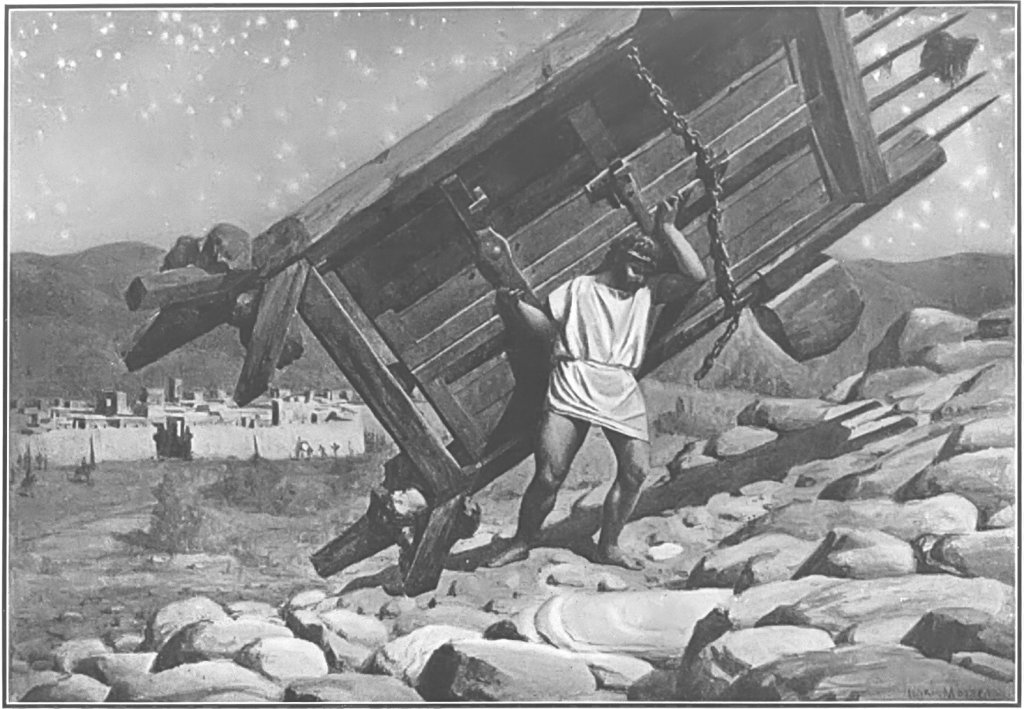
And after the Romans had put Jesus to death on the cross, Josephus and Nicodemus had put His body in the tomb, Jesus’ spirit went to Hades—the place where the spirits of all people at that time went after death. But unlike everyone else who had gone there before—Jesus didn’t remain there. The gates of Hade rang shut on Him as they had on all others—but they couldn’t stay shut. Like Samson ripping the gates and their posts up at entrance to the city of Gaza and carrying them off in Judges 16, Jesus tore the gates of Hades right off their hinges! As Peter would say in Acts 2:24, “It was impossible for death to keep its hold on Him.” As Jesus had said, ” . . . on this rock I will build My church, and the gates of Hades will not overcome it” (Matthew 16:18). And they didn’t!
The walls fell at Jericho, the gates were torn off the hinges in Hades, and God is ready to deliver anyone today who comes to Him through Jesus.
That’s the story!
 A Taste of Grace with Bruce Green