The Sabbath had a restorative function and purpose—all the texts point to this. No one was to engage in work—no one in the family, their servants, their animals, or the foreigner residing among them. Just think about life in a subsistence culture where a day’s work was of critical importance and you’ll have some idea of how radical the Sabbath command was.
And yet, the Sabbath was a gift from God to Israel. Jesus told us that the Sabbath was given with man in mind (Mark 2:27). God knew Israel better than they knew themselves and He understood how important it was to pause once a week to recharge and renew. This is the same principle as parents putting their children to bed at a decent hour or making sure their preschool children take a nap or have some type of rest time during the day—you know better than they do, and you parent accordingly. God knew what Israel’s needs were and gifted them with the Sabbath.
The Sabbath was a sign between God and Israel. Just as a wedding ring is a sign of the marriage relationship, the Sabbath was a sign that Israel was in sync with their Creator. Think of it, it was the last day of the week and all Israel was observing the Sabbath. There was no hurry, worry, scurry, or flurry going on anywhere though because the nation was observing the Sabbath. No one was out in the field, the animals were in their pens, all were at rest!
But it was more than that. It was also a sign to the world around them. In Israel’s later history, what must their non-Jewish neighbors have thought when it was the height of planting or harvest season and absolutely no one was out in their fields on the Sabbath. It showed the world that Israel not only honored Yahweh but trusted in His words as their way of life.
As significant as the Sabbath was, it was eclipsed by the eternal rest that Jesus brings. After all, you observed the Sabbath and six days later you needed another one. In a passage that prefaced Jesus’ discussion of the Sabbath (Matthew 14:1-12), Christ had this to say:
“Come to me, all you who are weary and burdened, and I will give you rest. Take my yoke upon you and learn from me, for I am gentle and humble in heart, and you will find rest for your souls. For my yoke is easy and my burden is light.”
Mathew 11:28-30
Jesus promised “rest for your souls” to people who came to Him. This is a superior rest than what the Sabbath was able to provide.
The Hebrew writer picks up on this and speaks of how “we who believe have entered that rest” (4:3). People who have committed their lives to Jesus enter this rest. It is a present reality (see Romans 5:1), but it is also one that will only be ultimately realized only when we pass from this life and into the next one. That why in the next chapter, we’re told in v. 9-11 that:
There remains, then, a Sabbath-rest for the people of God; for anyone who enters God’s rest also rests from their works, just as God did from his. Let us, therefore, make every effort to enter that rest, so that no one will perish by following their example of disobedience.
Hebrews 4:9-11
John was told in his vision to write this:
“Blessed are the dead who die in the Lord from now on. ‘Yes,’ says the Spirit, ‘they will rest from their labor, for their deeds will follow them.’” (Revelation 14:13)
Just as Israel’s deliverance from Egypt was eclipsed by Jesus’ deliverance of us from our sin— the rest the Sabbath provided Israel has been surpassed by the rest Christ provides His people. In this sense, the Sabbath is fulfilled and finished. It was a shadow of things to come and has been replaced by the reality of Jesus and His rest.
That’s why it isn’t part of the new covenant today. Disciples don’t observe the last day of the week. Instead, we find an emphasis in the New Testament on the first day of the week. This is the Lord’s day and the day Christians meet together (Acts 20:7; 1 Corinthians 16:1-2). But the Lord’s day isn’t the NT Sabbath. It is its own unique day and hasn’t been given for us to rest on it (many of our first century family had to work on Sunday and it didn’t become a non-working day until Constantine gave this status early in the 4th century).
Christ has brought us eternal rest, but there is still the matter of how we rest our bodies, minds, and spirits in the interim. It can be a challenge to find balance between too much and too little. We don’t want to live clunky, disorganized lives with no purpose or discipline—that won’t do. Our Lord deserves better. But a life where we are controlled by our calendar and are continually pushing aside the important for the urgent—that’s not the way to go either.
What’s the path we forward?
A significant part of it is instilling and honoring the Sabbath principle in our lives. This means periodically setting aside time to refresh, reflect, and refocus can seriously change the quality of life. This isn’t done at an amusement park, a football game, or a spa. These things are fine as far as they go—they can be welcome distractions and offer some refreshment, but they’re not conducive to deep reflection or refocusing—so they don’t go far enough. Yet it’s easy to fall into the trap of thinking this fast food is going to nurture our soul. It isn’t.
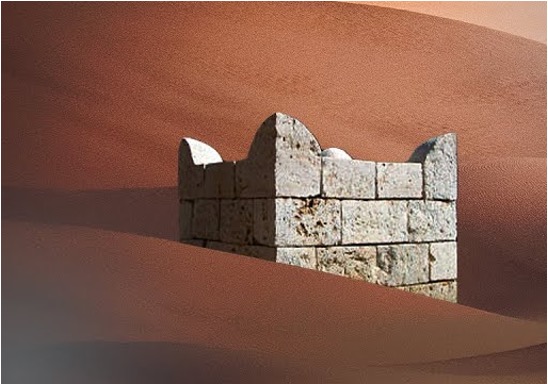
That brings us back to the sacred space we talked about when we saw Abraham building his altars to God. Like the Sabbath, we must set aside a time and a place to refresh, reflect, and refocus. We must be intentional about this because we don’t have time not to take time not to renew.
In 1999, John Kennedy, Jr., his wife, and his sister-in law were flying back from a wedding in a Piper Saratoga Kennedy was piloting. He was certified to fly under visual flight rules, which meant he wasn’t able to fly just relying on his flight instrumentation. Visibility that night was poor due to haze and landmarks were extremely difficult to see. Another pilot scrapped his flight plans because of the conditions. Kennedy apparently became spatially disoriented, and the plane headed into a descent and crashed almost nose first into the water, killing all three of its passengers on impact.
It’ a tragic story but one we can learn from. Too many times we find ourselves busy, busy, busy, and church and our spiritual life are the first thing that gets pushed off to the side. Suddenly, we’re flying without our instruments! Things might go okay for a while, but sooner or later, the haze moves in and we get disoriented.
Life has a rhythm we can choose to honor or ignore. We can pretend there’s no such thing as a sleep cycle and stay up all night, plant tomatoes in January, or try to snow sky during the summer. The results will not be good. Or, like the rhytmic ocean washing up on the shoreline, we can operate in harmony with the way God made us. Practicing the Sabbath principle gets us out of the center and puts God back in it. It enables us to stay refreshed, reflective, and refocused.
We don’t have time not to make time to practice this!
 A Taste of Grace with Bruce Green