
Our readings in E-100 were about Noah this week. It’s worth noting that Genesis 1-11 is not only an introduction to the rest of Genesis (i.e., the story of God’s promises to the patriarchs), but is also an introduction to bigger story that spans the biblical witness—the story of God’s redemptive call in Jesus.

Three events dominate this section: the sin of Adam and Eve, the story of Noah, and the Tower of Babel narrative. These are all links in a chain showing humanity’s continued movement away from God. In Eden we see the origin of sin on earth, in Noah we see it has consumed all humanity except for Noah and his family, and at Babel we see humanity’s attempt to go their own way in the newly cleansed world.
To say then that Noah lived in a broken world Is to say something we can partially understand since we see brokenness all around us. But it’s also important to recognize Noah’s world was broken to a much greater extent than ours. We’re told in 6:5, “The Lord saw how great the wickedness of the human race had become on the earth, and that every inclination of the thoughts of the human heart was only evil all the time.” This is followed by the astonishing statement concerning God’s regret that He had made man and how “His heart was greatly troubled” (v. 6). The forty days of rain that would soon fall were His tears over this lost generation.
All of this makes the way Noah lived even more amazing. We all know life can get difficult at times—but we always have each other to lean on and draw strength from. In Noah’s time there was no on outside his family—they were it! We don’t know how populated the world was, but we know none of them were interested in following God. But Noah came through for God. He lived as a man of faith in a world of faithlessness. And in coming through for God he came through for his family. That’s the way it works—if you want to be a good husband and father you must have relationship with your Heavenly Father and Noah did.
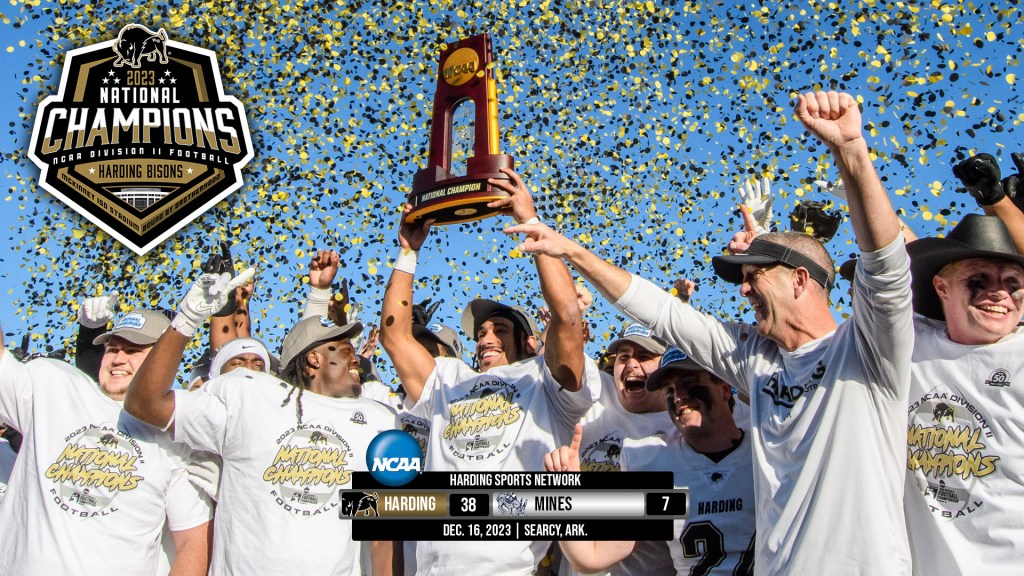
Paul Simmons is the head football coach at Harding University. They recently won their first ever Division II national championship in football. Pretty big stuff, right? You wouldn’t know if from the press conference after the game.
Here’s some of what Coach Simmons had to say:
I want my young men to be awesome daddies, I want them to come through . . . I got so many young men that come from broken homes that had fathers that weren’t even there and I’m telling them all the time, “Hey, that’s not going to be us. We’re going to come through. We’re going to have a generation of men who come through for their families. We’re not going to give in when it gets tough.
In speaking of the game they had just won he said:
This is not tough . . . this is really, really, easy. What’s tough is when you’re 35 years old and you and your wife can’t get along. You have a kid that’s up all night crying and you got to get up and go to work in the morning. But you get it done because that’s what a man does. He comes through. He honors his wife by putting himself last. He honors his kids by putting their needs in front of everything else.
We are trying to raise a generation of Christian Warrior Father Husbands that will come through and lead. We’ve got a broken culture and we need men. We’re trying to impact and raise up men. That is so much important to us than a national championship. I’ve said for a long, long time if we get it done and win a national championship, but nobody modeled to you what it means to be a Christian father and a Christian husband, and nobody showed you how to lead by serving then the whole thing was a waste of time and we have failed. And we don’t want to fail. We don’t want to fail in that regard.
Coach Simmons is doing his part to raise a generation of men like Noah who will come through for God and their family.

But fathers, how do we do that? The trait I want to call your attention to is this handling hard well. I think many times that’s the dividing line between coming through and not coming through. After all, Noah lived during possibly the hardest of times. He couldn’t do anything to change that, but he could handle hard well and that’s exactly what he did.
As Coach Simmons pointed out, fathers will experience difficult times. Rather than wasting time trying to get around whatever hard comes our way, we need to let God take us through it as Noah did. That is how you handle hard well.
As we do, we need to remember the words of another coach who said, “You gotta embrace hard. Hard times make tough people. Easy times make soft people.” And this final observation, “Lazy people do a little work and think they should be winning! Winners work as hard as possible and still wonder if they are being lazy!”
Let’s not shy away from the work and effort involved in handling hard well. God will bless us for it, and we will be a blessing to others.
 A Taste of Grace with Bruce Green