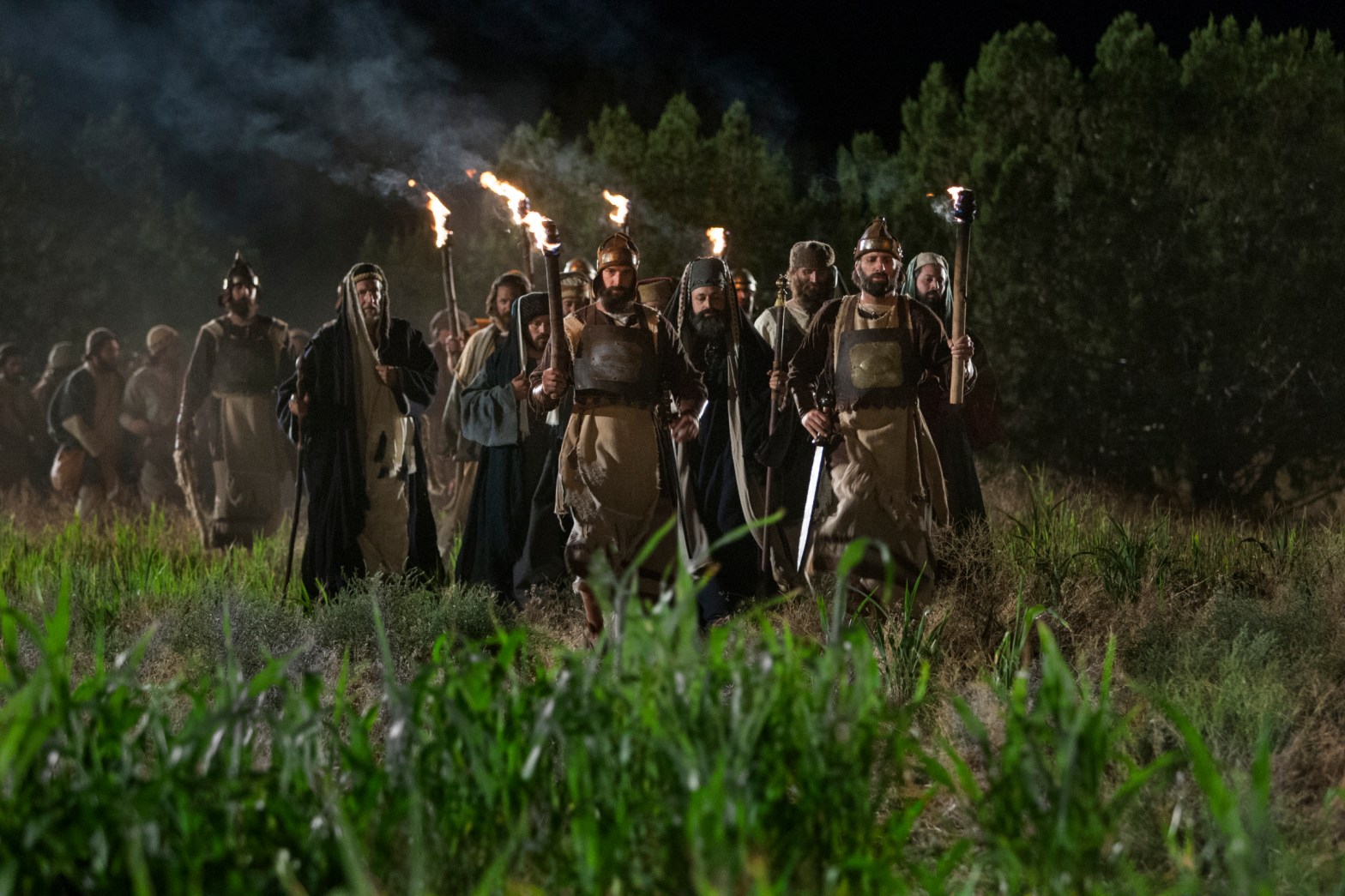
David wants to know, “Why did they step back and fall down when Jesus said, ‘I am He?’”
This question has reference to something that happened when Jesus was arrested. John records the scene in 18:1-6 of his gospel.
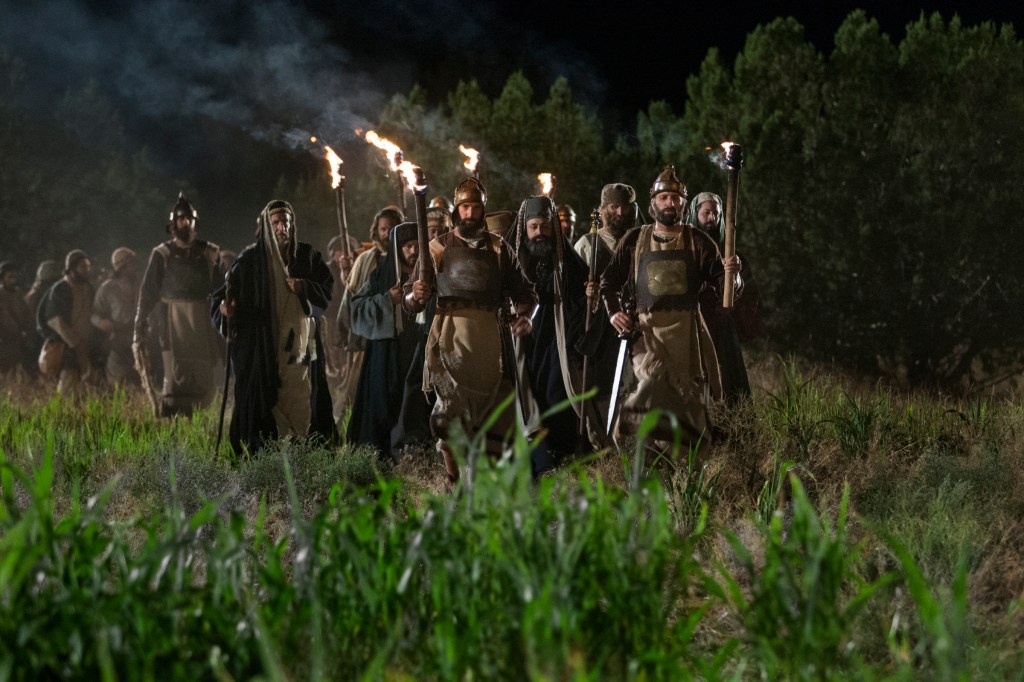
When he had finished praying, Jesus left with his disciples and crossed the Kidron Valley. On the other side there was a garden, and he and his disciples went into it.
Now Judas, who betrayed him, knew the place, because Jesus had often met there with his disciples. So Judas came to the garden, guiding a detachment of soldiers and some officials from the chief priests and the Pharisees. They were carrying torches, lanterns and weapons.
Jesus, knowing all that was going to happen to him, went out and asked them, “Who is it you want?”
“Jesus of Nazareth,” they replied.
“I am he,” Jesus said. (And Judas the traitor was standing there with them.) When Jesus said, “I am he,” they drew back and fell to the ground.
John identifies the group that came to the Garden of Gethsemane to arrest Jesus as consisting of “a detachment of soldiers and some officials from the chief priests and Pharisees.” We don’t know exactly what their number was, but they would have known from Judas how many disciples were with Jesus and planned accordingly. They were carrying torches and lanterns to illuminate their way and weapons to take Jesus by force if necessary. It’s late on Thursday night (early Friday by Jewish reckoning) when this happens. Jesus and His disciples had celebrated the Passover in the early evening and then walked to Gethsemane where Jesus prayed while the disciples slept.
To answer David’s question, we need to appreciate why Judas was needed by those who sought Jesus’ arrest. After all, it’s not like Christ was unknown or inaccessible during His final week in Jerusalem (Matthew 26:55) or throughout His ministry for that matter (John 20:20-21).
Part of the challenge for the religious leaders who wanted to arrest Jesus was that it needed to be done discreetly in order to avoid involving the masses of people who had gathered in Jerusalem for the Passover (Matthew 26:5). When Judas initially came to them offering to betray Christ (v. 14-16), they took him up on it because they knew he was a disciple of Jesus and as such, he would have access to Christ’s whereabouts at almost all times. When Judas returned to them later with the information that Jesus and His disciples would be cloistered in the garden after darkness—it was precisely the opportunity they had been looking for.
But there was another reason why Judas was needed. Different people and groups had tried to seize Him on several previous occasions, but no one had been successful (John 7:30, 44, 32, 45-46, 8:20, 10:39). There was obviously more involved in detaining Jesus than getting a detachment of guards together late at night and doing the deed—they needed the element of surprise to catch Him off guard if they were going to succeed where others had failed. Jesus alone and unaware—that’s the situation they were looking for.
Judas offered them all that and more. On that Thursday evening he went to the Jewish leaders and informed them that not only did they have the opportunity to discreetly arrested Jesus in the garden—but Christ was accepting of being handed over (John 13:21-30)! This was more than they had hoped for, and they wasted no time taking of the small window they had.
The leaders contacted the temple guard and together they all headed out to Gethsemane. We know how the leaders regarded Jesus, but we shouldn’t assume the temple guard viewed Him with the same disdain. They were working class—people who took orders rather than gave them. And remember, they had been previously sent out to arrest Jesus but were so overwhelmed by Him and His words they were unable to do their job! (John 7:32, 45-46).
They were probably aware of at least some of the other unsuccessful efforts to seize Jesus. It’s hard to believe they didn’t know about His raising of Lazarus not long before in nearby Bethany. They would certainly be aware of the events of the week—His triumphant entry into Jerusalem, His cleansing of the temple, His teaching at the temple, etc. The people held Him in awe, and it’s doesn’t seem a stretch to think that some of them might have as well.
With this in mind, I don’t think it’s hard to understand why they might have been reluctant to try to take Him prisoner under any circumstance—much less as part of a last-minute, thrown together detachment that came out to arrest a popular leader on the evening before the Passover. This context explains to my satisfaction why the soldiers drew back in fear when Jesus showed Himself willing to be taken into custody. I think His reputation coupled with His calm demeanor unnerved them just as His words had at the Feast of Tabernacles in 7:45-46. (There could also may be something to the fact that the words He used (ego eimi) are the same ones He used to identify Himself with God in John 8:58).
 A Taste of Grace with Bruce Green