Moses wrote Genesis for Israel as they were about to enter the promised land of Canaan. Whatever else the wilderness was, it was an opportunity for God to prepare Israel for life in the promised land of Canaan. Toward that end, He gave them the Law at Mount Sinai to guide them. Adding it to the list, they now shared a language, had a land, a law . . . what else could they possibly need?
Their story.
They needed the solidarity of a story that had been standardized, centralized, and prioritized. It’s not that they hadn’t heard their story from Moses, Aaron, and other leaders. I’m sure there was also something like Exodus 13:44ff going on in their families. But the situation was like that of the law—it’s not that they didn’t have law before Mount Sinai—but the fledgling nation needed something from God that was written, preserved, and capable of being passed down from one generation to the next without corruption. They needed Scripture!
And that’s what God lovingly provided them with.
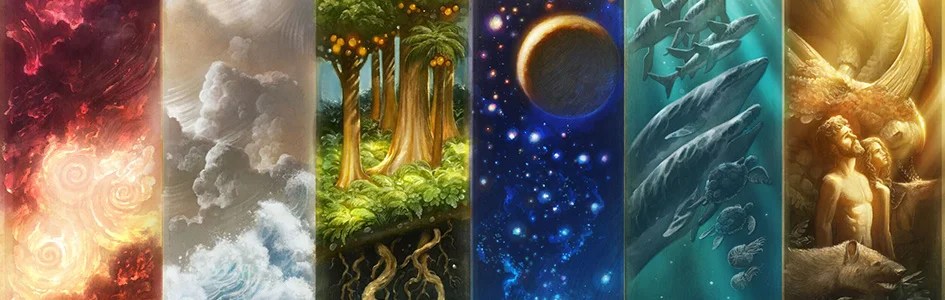
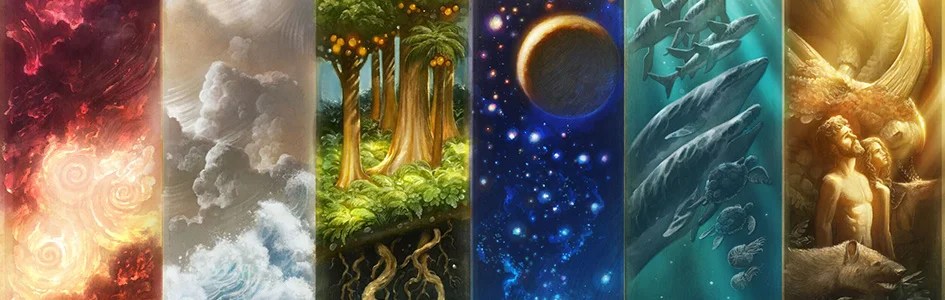
One of the purposes of the creation account was to immunize them from the idolatry they had seen in Egypt and would see in Canaan. As Israel read about the creation, they would see all the things that Egyptians worshiped (the sun, moon, water, land, animals, etc.) were not gods, but rather were made by the one God (Yahweh) who had revealed Himself to them. As others have pointed out, it would be hard for them to read about God separating the “water from water” (1:6), without thinking about Him separating the waters of the Red Sea in bringing them out of Egypt. Similarly, as they read about the Spirit “hovering over the waters” and bringing order out of chaos (1:2), it would be hard not to look at their own rag-tag existence first in Egypt and them in the wilderness and appreciate the ordered life He was bringing them to in Canaan. Yahweh was the God of creation who was constantly bringing new creation to them. As we read Genesis, I think we need to have this same perspective.
But this can be a challenge because we have our own idolatry today. It’s not the ancient idolatry to of worshipping other gods. In the 21st century, our idolatry has to do with the worship of self. What is of supreme importance in our lives is pursuing personal fulfillment, being free to do what we want to do, self-actualizing. Everything is bent toward this. Creation truths are cast aside because they get in the way of this narrative. We decide how we want to do marriage, gender, sexuality, and family. They are what whatever we want them to be, and we justify it by saying this is what we need them to be.
Like Eve, we’ve been deceived by the wrong story—we are not gods—we’re made in the image of God. Like Eve, this is no trivial matter. When we reject creation truths, we are in essence saying to our Creator, “You did it the wrong way. Let me show you how it should be done.”

Creation should awaken a spirit of praise and celebration in us. For the record, God’s creation is awesome in the real sense of the word. We were at Santa Rosa Beach over Christmas. You could stand on the beach and look toward the horizon and as far as you could look all you could see was water. The vastness of it put my little life in perspective and left me flooded with a feeling of peace to know that the One who made the ocean (and everything in it), who uses the moon to control the tides and the wind to create the rhythmic lapping of waves on the shore—He could certainly take care of my life.
Celebrating the God and His creation is a theme that’s found throughout Scripture, but especially is the book of Psalms. It should be part of our lives as well. Parents I know this sounds heretical, but you could probably spend a month a in state park for what you’ll pay to go on one trip to the Magic Kingdom. State park trips may not look as cool on social media, but there’s a much greater likelihood that they will make an eternal impression of your children as you expose them to the beauty and wonder of God’s creation.

Creation should point us to marital oneness. We also learn from the creation account about the special relationship between a man and a woman known as marriage (2:18-25). God made from one person two, so that He could make from the two people one. God’s goal for marriage is oneness. The only way this relationship works is if both people learn to place the other person’s needs ahead of their own. When that occurs, authentic intimacy takes place. Husbands and wives find that as they are receiving each other, they are receiving themselves.
But this important—you don’t marry your soulmate; you marry someone who becomes your soulmate. Our idea of a soulmate is based on the idea that out of the 8.1 billion people living on earth, God has one special person for you—you just have to find them! That’s a romanticized notion that comes from Hollywood rather than the Bible. Consider that Ephesians 5:22-33 and other profound marriage texts were written to husbands and wives whose marriages were arranged. Were they soul mates as they walked down the aisle or did whatever in their culture constituted getting married? Hardly. Could they become soulmates as they gave their lives (and marriages) to God? Absolutely.
Creation reminds us of the dignity of work. Adam and Eve are placed in the garden “to work it and take care of it,” (2:15). Several important points flow from this: 1) work is what we do because we are made in God’s image, 2) it is one of the ways that God blesses us, 3) it was part of a perfect world, and 4) it was more than just a means to an end.
Work is a blessing because when we engage in it for the right reasons, it answers to our very nature. (Is there a greater feeling than that of a job well done?). Correspondingly, to have the ability to work and not to robs us of our humanness. When God came to earth, He saw nothing wrong with working with His hands and standing among wood shavings!
The playwright, Eugene O’Neil was writing to his adult son about the pleasure he had in his son’s achievements. He said, “Work you know is your work, which belongs to you! That’s the best thing about it. It seems to me I so rarely meet anyone who knows that the work he does is his work, a part of him, and not an extraneous support for his living. Even with people who are extremely successful, I feel this. Their work is an exterior job, not an inner necessity.”
He said a lot, didn’t he? It won’t do to worship work but how sad it is when such a significant percentage of our time, energy, and life are viewed only as something that must be done to support the “rest” of our life.
Creation reminds us of our fundamental identity. The creation account tells us we are made in the image of God. Rather than taking this to mean what man is made of, I understand it as what man is made for.We were made to image God. The text isn’t pointing us to a portion of people that is made in God’s image (like our intellect, or creativity, our ability to love, or whatever aspect of humans you might choose)—it deals with the entirety of lives reflecting God. Nothing else in creation has the capacity to do this!
We live in a world that overemphasizes our identity in terms of gender, race, ethnicity, and says nothing in all about our primary identity of being made to image God. If we want to help our young people out in this confused culture they are growing up in, let’s remind them their identity is first and foremost that they have been made to image God.
Creation tells us who we are, where we came from, why we’re here and where we’re going. Knowing these creation truths is the difference between being a question mark or an explanation point in life.
 A Taste of Grace with Bruce Green