Who would you rather be: a prisoner of war or someone who occupies an important position of power and influence?
Doesn’t seem like much of a choice, does it? But what if I told you the prisoner of war is Daniel, and the person with power and influence is Nebuchadnezzar? That would change things, wouldn’t it? And we realize that there’s more to the question than we originally thought.
When we look at it from a deeper, more informed perspective, we realize the choice is between someone who has character and someone who is a character. Yet in our self-asserting, entertainment driven culture though, I’m sure there are many who would choose being a character over having character. After all, having more followers is more important to them than following what is good, right, and true. They don’t understand that who you are as a person is more important than any position you might have.
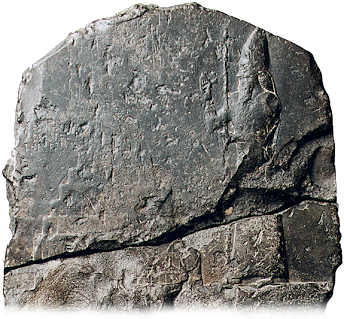
Nebuchadnezzar certainly belonged in that category. He has an exalted position, a kingdom of followers, and power, power, power. But he does not have the one thing he really needs to make him right with God—humility. In fact, the king was hurting for humility.
Maybe the place to start in thinking about Nebuchadnezzar’s lack of humility is with a little understanding. After all, I think we all agree it would be a major challenge for even the humblest person to be king and retain their sense of humility. When you are king, you are the center of things whether you want to be or not. You have unlimited power. Everyone hangs on every word you say. You think that wouldn’t swell your head a little bit?
Furthermore, Nebuchadnezzar’s father was a king (Nabopolassar), so he had been raised in royalty. None of this excuses his behavior, but I think it explains quite a bit of it.
That said, Nebuchadnezzar has had two major, big stage occasions where he has had the opportunity to learn about the true king (God Almighty) and correspondingly humble himself. In chapter two the king, who was sleepless in Babylon, has his mysterious and troubling dream explained to him through the power of God by His servant Daniel. Then in chapter 3, he witnessed Shadrach, Meshach, and Abednego be miraculously delivered from a fiery furnace by the power of God. On both occasions, he was quick to humble himself and recognize God.
Unfortunately, it didn’t last.
That’s always the challenge, isn’t it? Whether we’re talking about being more loving or less critical, whatever the attribute might be, the challenge is not to practice it for an afternoon or an evening, but to make it part of who we are—to allow it to become part of our character. Anyone can anything for a bit, but to allow it to become part of who you are—that’s the challenge that Nebuchadnezzar was not up to.
But Daniel is.
We see this throughout the book (if we’re paying attention). It’s there in the background, but it’s there. We see it when:
- Daniel praises God for revealing Nebuchadnezzar’s dream to him in 2:19-23. (It’s hard to be prideful when you’re praising God).
- It is juxtaposed with Arioch’s pride. Daniel tells Arioch not to execute anyone, he can interpret Nebuchadnezzar’s dream. When Arioch goes before the king, he tries to take credit for this development by telling him, “I have found a man . . .” Meanwhile, Daniel makes it clear to Nebuchadnezzar in v. 27-28 that no one can interpret dreams but God.
- Even though Daniel is placed in a high position, given lavish gifts, made ruler over the province, and put in charge of the wise men, it doesn’t change anything about him. When we next hear from him in chapter 4, he’s the same person he was in chapter 2. He takes no joy in telling Nebuchadnezzar the dream is about him (v. 19) and urges him to humble himself (v. 27).
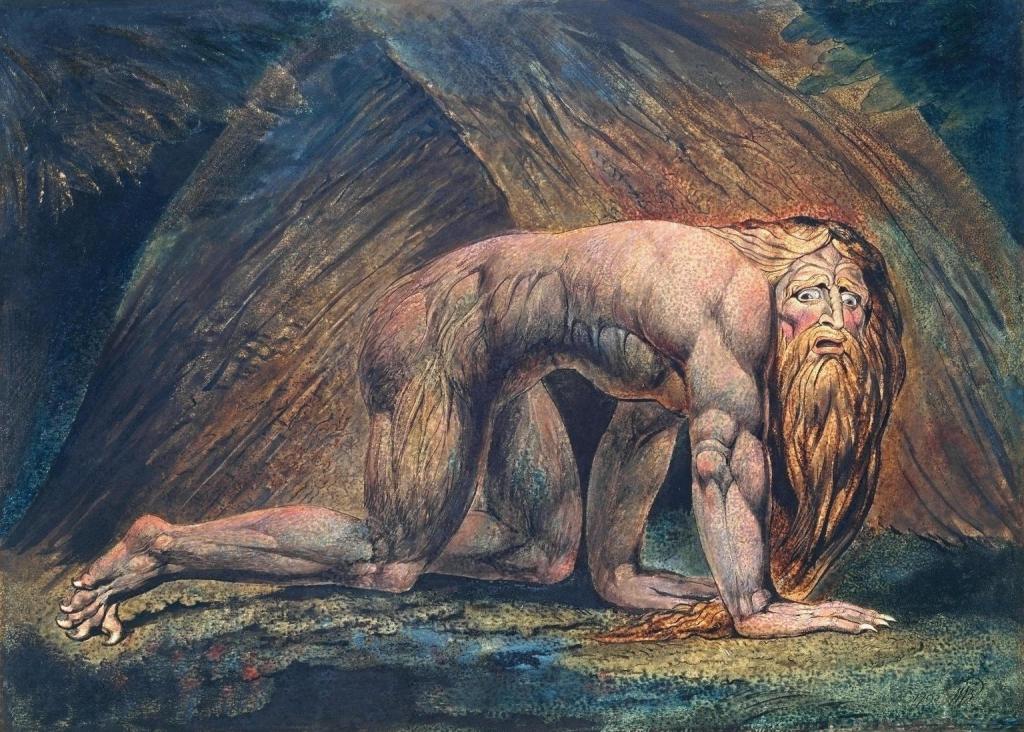
On the other hand, Nebuchadnezzar must learn the hard way. That’s one of the consequences of being a prideful person. Even after Daniel reveals to him the meaning of his dream and counsels him to repent, he fails to do so. As a consequence, and in a show of His absolute power, God humbles Nebuchadnezzar by transforming him into something animalistic. The king drops down in the created order of things (perhaps suggesting that pride dehumanizes us and makes us more like an animal than a human). This is too much for even Nebuchadnezzar, so after a period of time he humbles himself by raising his eyes toward heaven. He is restored to his humanity and kingship where he acknowledges and praises God.
Whether you are a king or a prisoner of war the message is clear: “Humble yourselves, therefore, under God’s mighty hand, that he may lift you up in due time.” (1 Peter 5:6)
 A Taste of Grace with Bruce Green